

Treatments & products
Threadworm — your questions, answered
How do I know if my child has threadworms?
The classic sign is an itchy bottom, worse at night when the worms lay their eggs. You may spot the worms themselves — like tiny white threads, about a centimetre long — around a child's bottom or in their poo. Threadworms are extremely common in young children and nothing to be embarrassed about.
How is threadworm treated?
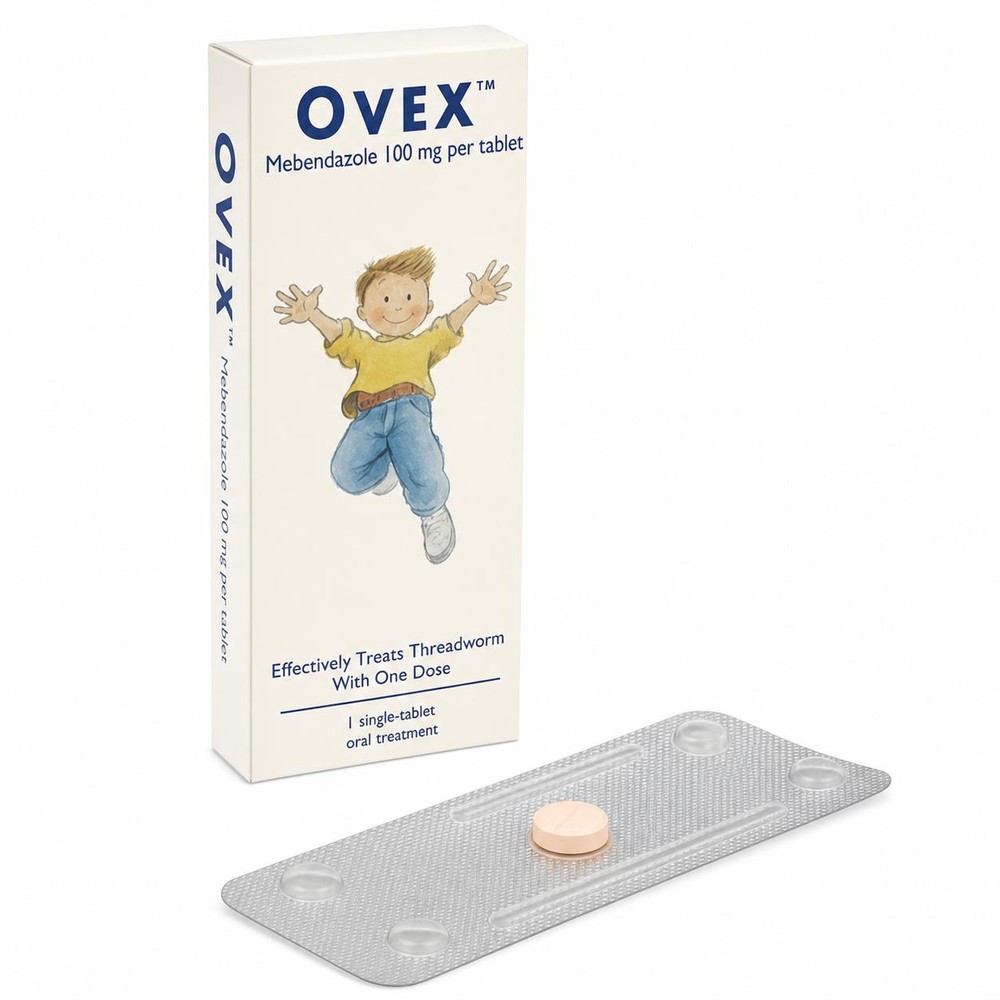
A single dose of mebendazole (Ovex), taken by everyone in the household on the same day — including people without symptoms, because the eggs spread very easily between family members. Our pharmacist can advise on children under 2 and on pregnancy or breastfeeding, where hygiene measures alone are usually recommended instead.
Why does everyone talk about hygiene as well as the medicine?
Because the medicine kills the worms but not their eggs, which can survive for up to two weeks on bedding, clothes and surfaces. For a fortnight after treatment: wash hands and scrub nails regularly, shower each morning, wash bedding and nightwear, keep fingernails short and discourage nail-biting. Skipping this is the usual reason threadworms come straight back.
Do threadworms cause any harm?
Usually not — they're irritating rather than dangerous, and they don't mean a home is unclean. See your GP if symptoms continue after treatment, if the person affected is under 2, pregnant or breastfeeding, or if there's tummy pain, weight loss or bleeding, which need checking properly.
Information only — always read the patient leaflet and ask our pharmacist if you're unsure. Prescription treatments are supplied only after a consultation and our pharmacist's approval.