
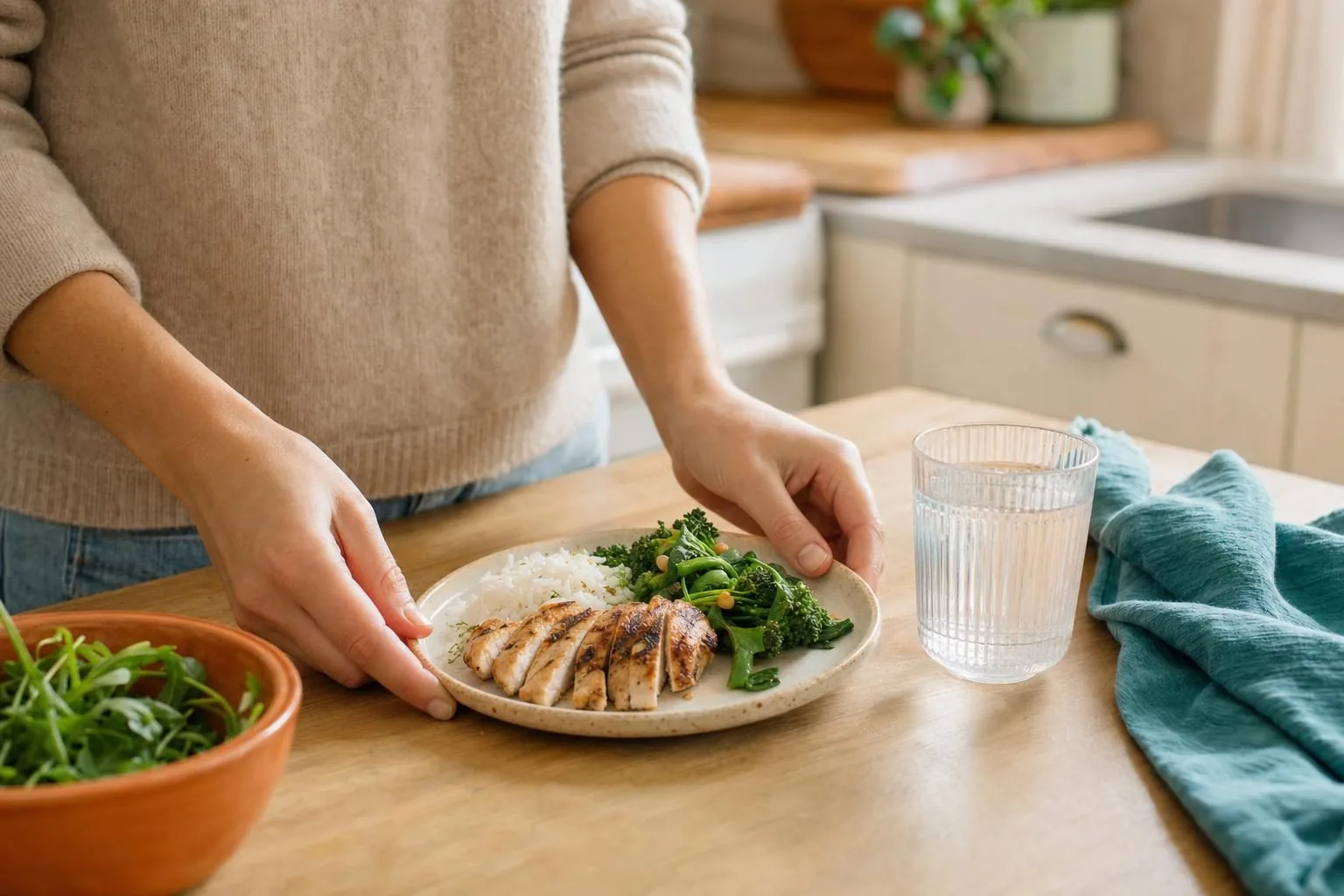
Weight-loss injections in the GLP-1 family — such as Mounjaro (tirzepatide) and Wegovy (semaglutide) — work largely by turning down appetite. You feel full sooner and stay full for longer, so you naturally eat less. That is the point. But it also creates a new challenge most people don’t expect: when you’re eating smaller amounts, what you eat matters far more than it used to.
This guide is a plain-English, pharmacist-team overview of how to eat well while you’re on treatment. It isn’t a meal plan and it isn’t personal medical advice — your pharmacist or GP is the right person for that — but it should help you get more out of every meal and side-step the common pitfalls.
Why food matters more, not less
When your total intake falls, there is less room for “empty” calories. Every meal has to do more nutritional work in a smaller package. Two things in particular are easy to lose if you’re not deliberate about them:
- Protein — the building block your body uses to protect muscle while you lose fat.
- Vitamins, minerals and fibre — easy to under-eat when portions shrink and appetite is low.
Losing weight is the goal; losing muscle along with it is not. Protecting muscle is one of the main reasons every reputable weight-management programme pairs the medicine with attention to food and movement, rather than treating the injection as a stand-alone fix.
1. Protein first, at every meal
If you remember one thing, make it this. Build each meal around a source of protein and eat that part first, while your appetite is highest. Good everyday options include:
- Eggs, Greek yoghurt, milk and cheese
- Chicken, turkey, fish and lean red meat
- Beans, lentils, chickpeas, tofu and edamame
- A scoop of plain protein powder stirred into porridge or a smoothie on low-appetite days
On days when even a normal portion feels like too much, a protein-rich drink or yoghurt can be an easy way to keep your intake up without forcing a full plate.
2. Drink more than you think
Appetite-reducing medicines blunt thirst as well as hunger, so it’s easy to drift into mild dehydration without noticing. That alone can cause headaches, tiredness and constipation — symptoms people sometimes blame on the medicine when the real culprit is simply not drinking enough.
Keep a glass or bottle of water within reach and sip through the day rather than waiting until you feel thirsty. Water, sugar-free squash, herbal teas and milk all count.

3. Eat in a way that settles the stomach
The most common side effects of GLP-1 medicines are digestive — nausea, fullness, reflux, or a change in bowel habit — especially in the first weeks and after a dose increase. The right way of eating makes a real difference:
- Smaller, more frequent meals rather than three large ones.
- Eat slowly and stop at the first sign of comfortable fullness — pushing past it is what triggers most nausea.
- Go easy on very rich, fatty or fried food, which sits heavily and is the usual trigger for queasiness.
- Plain, gentle foods — toast, crackers, rice, bananas, clear soups — are kinder on a delicate day.
- Keep fibre and fluids up (vegetables, fruit, wholegrains, beans) to help with constipation.
4. Eating out and social meals

One of the quiet worries people have is that treatment will make them the awkward one at the table. It really doesn’t have to. A few easy habits keep meals out enjoyable:
- Order a starter as a main, or share dishes, so the portion matches your appetite.
- Lead with the protein and vegetables; treat rich sides as a taste rather than the bulk.
- Don’t feel you have to finish the plate — a box for the rest is a win, not a waste.
- Be a little cautious with alcohol: it’s easy to feel its effects faster when you’re eating less, and it adds calories with little nutrition.
5. Protect your muscle: move a little, often
Food does most of the work of protecting muscle, but gentle activity helps too — and it doesn’t mean the gym. A daily walk, light resistance work, gardening or simply staying active around the house all count. The aim is consistency, not intensity.

6. Be kind to yourself on the low days
Some days your appetite will be very low and a full meal will feel impossible. That’s normal. Rather than skipping food entirely, fall back on something small and nourishing — a yoghurt, a glass of milk, a piece of fruit and some cheese, a few spoonfuls of soup. The goal is steady, gentle nutrition, not perfection.

Putting it together
You don’t need a perfect diet to do well on weight-loss treatment — you need a few reliable habits: protein first, plenty of fluids, gentle portions, and a bit of daily movement. The medicine reduces how much you want to eat; these habits make sure the food you do eat keeps you strong and well while the weight comes down.
If you’re already a patient with us, your monthly follow-up is the place to talk through how eating is going and adjust as you progress. If you’re still weighing things up, you can read our overview of UK weight-loss medications or our comparison of Mounjaro and Wegovy, and see the treatments we offer on our pharmacist-led weight-loss page.
-
1Protein firstEggs, yoghurt, fish, chicken, beans, tofu. Appetite is highest at the start of a meal, so this is when protein is easiest to get down — and it is the part that protects your muscle as the weight comes off.
-
2Vegetables and fruit nextFibre, vitamins and fluid, and the part that helps most with the constipation people often get on treatment.
-
3Wholegrain carbs lastBread, rice, potatoes, pasta. Filling but the easiest to skip on a small-appetite day — so leave it until last rather than starting with it.
Questions about eating on treatment?
Our pharmacist team is happy to talk through food, side effects and what to expect — there’s no charge for an initial chat.
WhatsApp the pharmacy Call 0113 244 1551Sources & further reading
Where to get it
Our pharmacist can check what suits you. Every treatment is supplied only after a pharmacy consultation confirms it is appropriate.
Weight Loss treatments →This article is general information and does not replace personal medical advice. Mounjaro and Wegovy are prescription-only medicines supplied only after a clinical assessment by a pharmacist or prescriber. Always consult a qualified healthcare professional before starting or changing any treatment. If you experience side effects from a medicine, report them via the MHRA Yellow Card scheme at yellowcard.mhra.gov.uk.