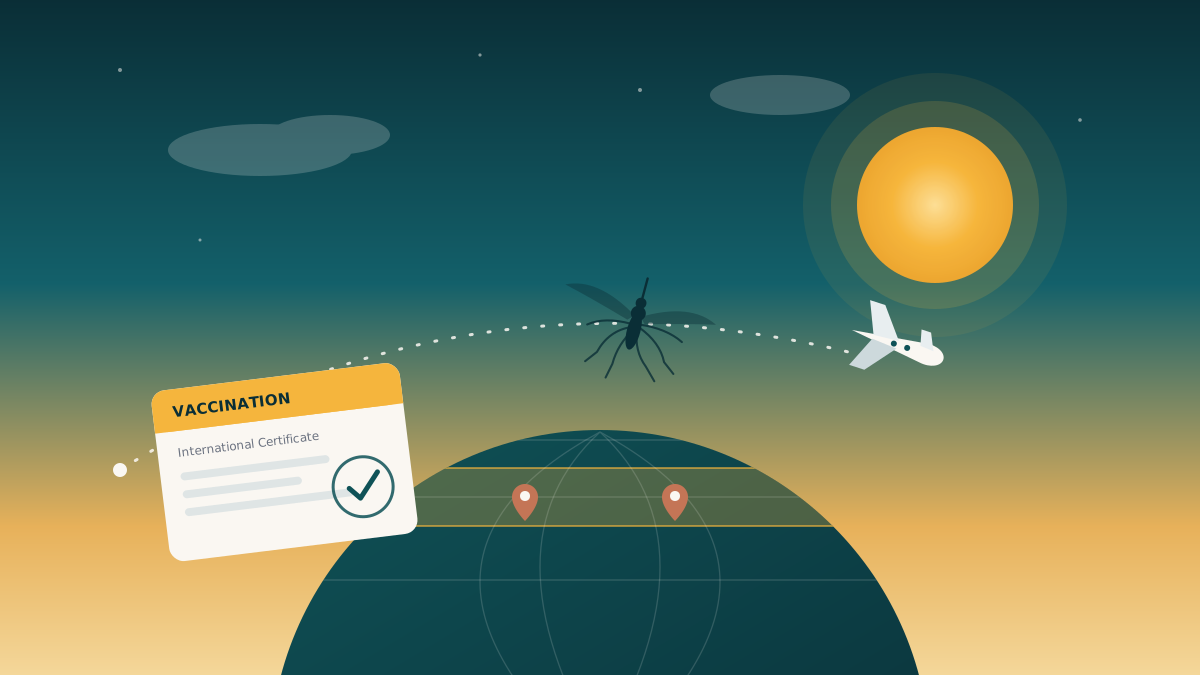
If you're travelling to parts of Africa or South America, you may be asked for proof of yellow fever vaccination before you're allowed to enter — and some countries won't let you cross the border without it. It's one of the few vaccines tied to an internationally recognised certificate, so it pays to understand the timing well before you fly.
This guide explains what yellow fever is, who needs the vaccine, how far ahead to plan, and exactly what happens when you come in for a travel appointment. It's general information to help you prepare — your own suitability is always decided by the pharmacist or prescriber on the day, after a proper assessment.
What is yellow fever?
Yellow fever is a serious viral infection spread by mosquito bites. It circulates in tropical regions of sub-Saharan Africa and parts of Central and South America. Most people who catch it have mild, flu-like symptoms, but a minority go on to develop severe illness affecting the liver and kidneys — which is where the "yellow" (jaundice) in the name comes from. There is no specific treatment, so prevention through vaccination and avoiding mosquito bites is what matters.
Who needs the vaccine?
You should consider yellow fever vaccination if you are travelling to, or through, a country where the disease is present — or to a country that requires a certificate as a condition of entry (sometimes even if you're only transiting). The two reasons are different:
- For your own protection — because there's a real risk of yellow fever at your destination.
- For entry requirements — because the country you're entering wants to prevent the disease being carried in from elsewhere, and asks all eligible arrivals for a certificate.
A travel risk assessment matches your exact itinerary — countries, regions, rural vs urban, time of year and activities — against the latest TravelHealthPro country guidance. That's why we ask for your full plan rather than just your main destination.
How far ahead should I book?
This is the part travellers most often get caught out by. The vaccine — and the certificate that goes with it — only becomes valid 10 days after the injection. If you're flying in a week, the certificate won't be active in time. As a rule of thumb, arrange your appointment at least 10 days before departure, and ideally several weeks ahead so there's room for any other travel vaccines you might need (some of which are given as a course over time).
Good news on boosters: Since 2016, international rules recognise that a single dose of yellow fever vaccine provides protection for life for most people. The certificate is now valid for the lifetime of the person vaccinated, so if you've had it before you may not need it again — your pharmacist will check your records and circumstances.
The International Certificate (ICVP)
When you're vaccinated at a registered yellow fever vaccination centre, you receive an International Certificate of Vaccination or Prophylaxis (ICVP) — often called the "yellow card". This is the document border officials may ask to see. It becomes valid 10 days after vaccination. Keep it with your passport when you travel, because a country that requires it can deny entry without it.
Is the vaccine right for everyone?
The yellow fever vaccine is a "live" vaccine, which means it isn't suitable for everyone. It's safe and effective for the great majority of healthy travellers, but some people need extra care or an alternative plan. The pharmacist will go through this with you — you don't need to work it out yourself — but it helps to know the kinds of things that are considered:
What happens at your appointment
A yellow fever appointment is more than just an injection — it's a short travel-health consultation. Here's the usual flow:
- Travel risk assessment. We go through your destinations, dates, itinerary and planned activities, and check current country guidance.
- Health and medication review. We check your medical history, any medicines you take, allergies and previous vaccinations to confirm the vaccine is suitable for you.
- Vaccination. If it's appropriate, the vaccine is given as a single injection into the upper arm.
- Your certificate. You're issued your International Certificate (valid from day 10).
- Wider travel advice. We talk through bite avoidance, any other vaccines or antimalarials you may need, and what to watch for after travel.
Are there side effects?
Most people have nothing more than a sore arm, or mild headache, muscle aches or a low-grade temperature in the week or two afterwards. Serious reactions are rare. The pharmacist will tell you what's normal and when to seek advice, and you'll be asked to wait a short time after the injection.
Planning a trip from Leeds?
Book a travel health consultation with our pharmacy team. We'll assess your itinerary, talk through yellow fever and any other vaccines you need, and make sure your timing works before you fly.
See our travel clinic Request a callbackThis article is general information about yellow fever and travel vaccination and is not a substitute for individual clinical advice. Yellow fever vaccine is a prescription-only medicine and can only be given after an individual assessment by a suitably qualified healthcare professional at a registered yellow fever vaccination centre. Whether the vaccine is right for you is decided by the pharmacist or prescriber on the day. Country entry requirements change — always check current TravelHealthPro and FCDO guidance for your destination before you travel.